
How the system works
The Brand Avatar System
Creative fatigue arrives in two to three weeks. A campaign shoot takes six to eight. This is how we close that gap — and what the output actually looks like when it is done properly. Six frames from each of two films are below, produced for a live account without a shoot.
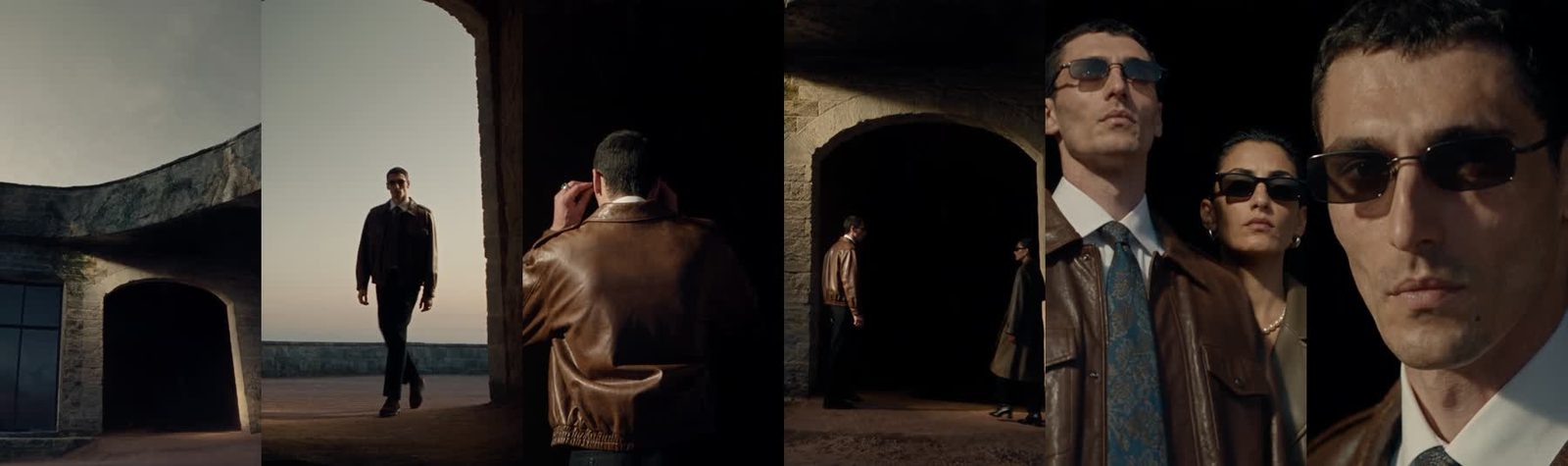 Film 01 — 13s, 9:16 · produced without a shoot
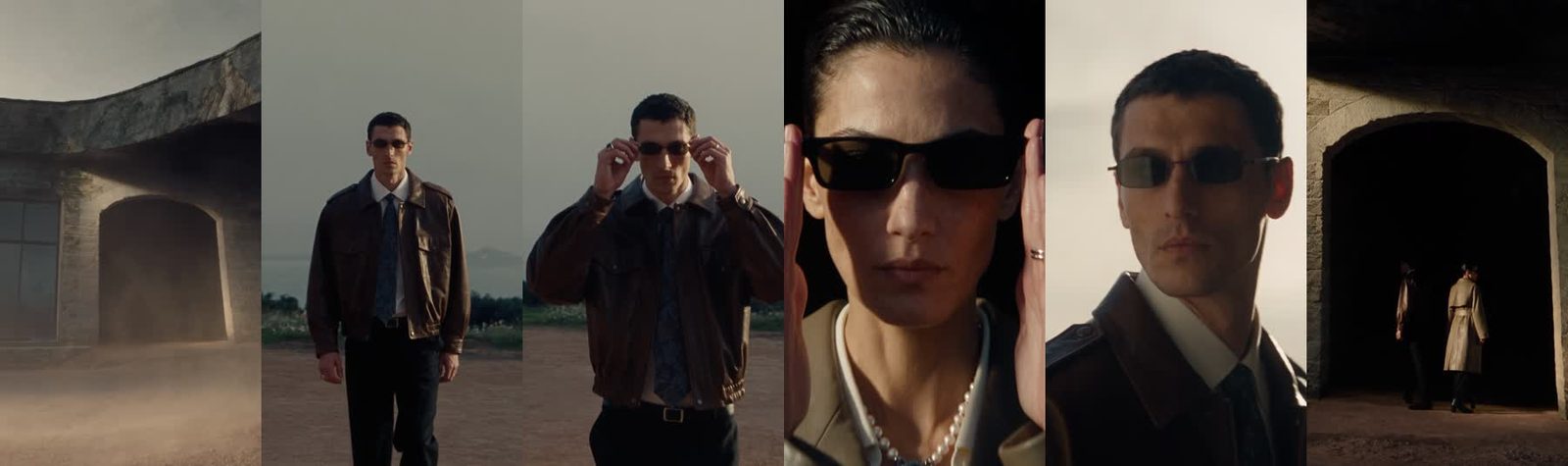 Film 02 — 10s, 9:16 · produced without a shoot
Premise
The arithmetic that governs every ad account
A performing creative stops performing in roughly two to three weeks. The audience has seen it, and the numbers decay. That is normal, and it is not a quality problem.
A conventional campaign shoot takes six to eight weeks from brief to delivered assets. Which means the production model cannot, structurally, refill the feed as fast as the feed empties. The arithmetic simply does not close.
Most brands respond by re-cutting the same shoot until it stops working, then booking another one. That is not a creative failure. It is a supply problem wearing a creative costume.
Where the weeks actually go
| Route | Elapsed | Source |
|---|---|---|
| Conventional shoot | 6–8 weeks | Matthias Haase, VP Content Solutions, Zalando — on record to Reuters, May 2025, describing their own production cycle |
| Generative route | 3–4 days | Same source. Zalando reports roughly 90% lower cost, and ran about 70% of editorial campaign imagery this way |
| Creative fatigue | 2–3 weeks | The window a performing creative has before the numbers decay |
Note that the shoot itself is one to three days of that. The weeks go into casting, booking windows, contracting, usage negotiation and two rounds of client approval. Which is why reshooting a single collection does not cost you a day — it costs most of the six to eight weeks again.
System
Four stages, two of which happen once
The alternative is not a cheaper shoot. It is taking the shoot out of the path between a new product and a finished creative — by building the face once, as an asset you own, and producing against it indefinitely.
Each stage has a defined input, a defined output, and a gate it has to pass before the next one starts.
01 · Decode
OnceYour existing assets become a written visual specification: light shape and ratio, palette values, wardrobe system, pose and gaze rules, crop discipline, colour grade.
- In
- Your assets, product photography, references, reviews
- Out
- A locked visual specification
- Gate
- The spec reproduces your existing frames side by side
02 · Cast
OnceA persistent avatar is built to that specification — not a prompt that returns a similar-looking person each time, but a fixed identity that holds across angle, lens, lighting and wardrobe. This is the asset.
- In
- The locked specification
- Out
- A reproducible avatar you own outright
- Gate
- Identity holds across a full angle and wardrobe set
03 · Compose
Every cycleCreatives are built with the avatar and your real product. The product comes from your own photography — never invented by a model. That is what keeps it exactly right, keeps fine detail and engraving legible, and is the real answer to the requirement that the work not read as AI.
- In
- Avatar, product photography, angle and hook
- Out
- Finished statics and video, cut to platform ratios
- Gate
- The output standard, in full
04 · Compound
Every cycleStages 1 and 2 happen once. Every cycle after that re-enters at stage 3, which is where the economics change. Each cycle's results feed back into which angles and formats get produced next, so the system gets more accurate rather than merely faster.
- In
- Last cycle's numbers, plus any new products
- Out
- The next set of concepts, weighted to what worked
- Gate
- Indistinguishable from the last cycle in look; better in performance
What you own at the end of it
- A written brand visual specification — which most brands do not have in any form.
- An avatar, owned outright. No term, no territory limit, no usage renewal, no re-booking.
- A production route from a new product to a finished creative that never passes through a calendar.
One distinction that matters legally
The avatars are fully synthetic. They are not digital twins of real models, and no living person's likeness sits underneath them.
The best-known deployment of this technology in fashion — H&M's 2025 programme — built AI doubles of thirty real models. Those models kept ownership of their own twins, stayed free to license them to competing brands, and are still paid per use. That is a faster shoot. It is not an owned asset, and the licensing clock never stops.
A synthetic avatar has no counterparty. That is the difference between reducing a recurring cost and removing one.
It is worth knowing what the conventional route costs on this axis too. A model's day rate buys the shoot, not the pictures — usage is priced separately across term, media and territory. On published Gulf agency rates, one year of GCC digital and social rights adds roughly 155% to the base fee per model, and perpetual rights run 200–300% on top. Whoever is the face of your brand is therefore a renewable expense on a clock that started the day the work was delivered.
The case
What it produced
A Saudi eyewear label in Riyadh. Premium-accessible, design-led, minimal — the kind of brand whose whole equity sits in restraint, which makes it an unforgiving test.
Their existing campaign was properly made and properly expensive: a studio editorial, a location shoot, product renders, six films, and two booked models. Beautiful, and finite. One campaign against a range that needs a feed.
We decoded five rules out of their own imagery, compiled those into seven locked specifications, and produced from there. No shoot, no booking, no call sheet.
The sheet library
This is the reusable half, and it is the half a brand keeps. Two eyewear specifications, two avatars, a location, and the wardrobe for each.
None of it is a mood board. Each sheet is a locked input, and every frame of both films came out of them — which is why the faces, the frames and the clothes hold instead of drifting shot to shot.
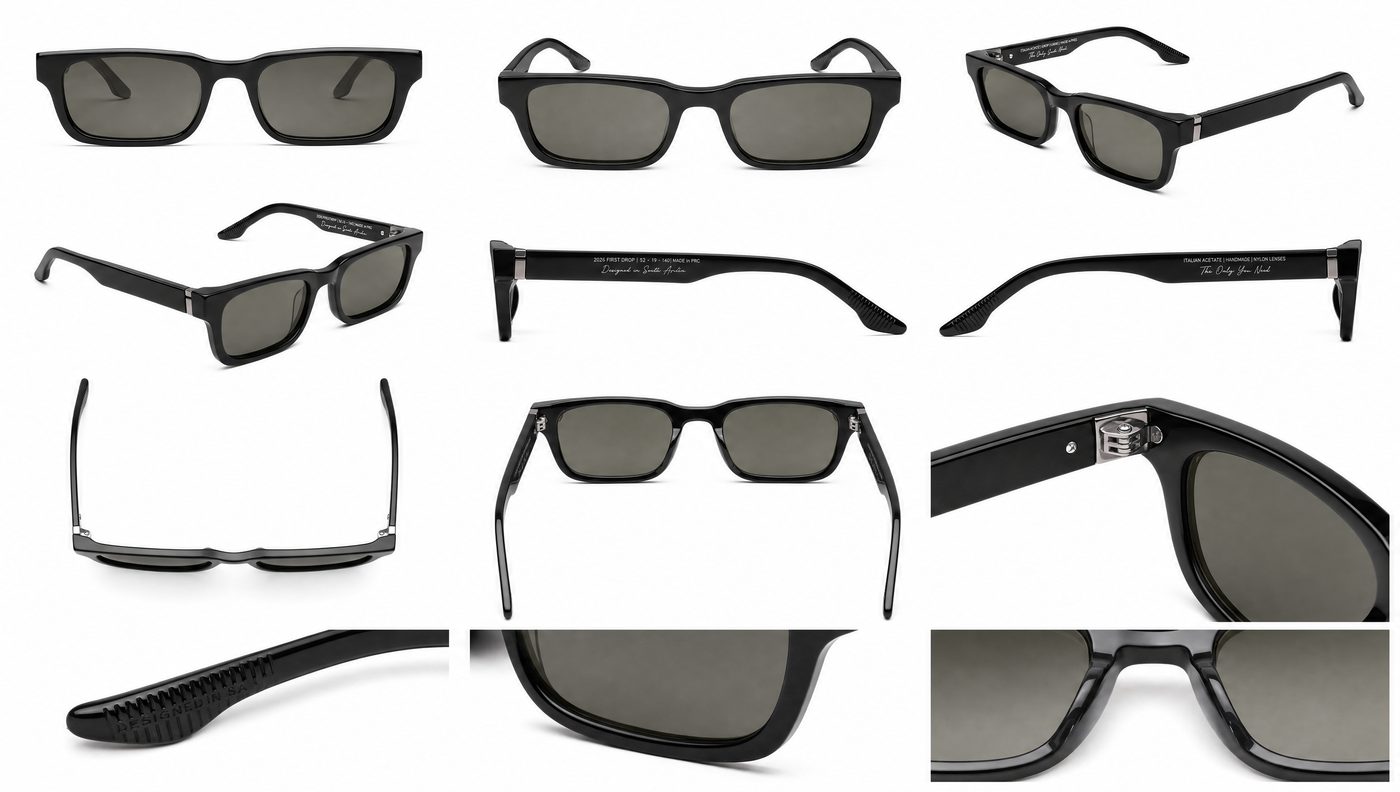 Product specification · acetate. Twelve views, built from the brand's own photography
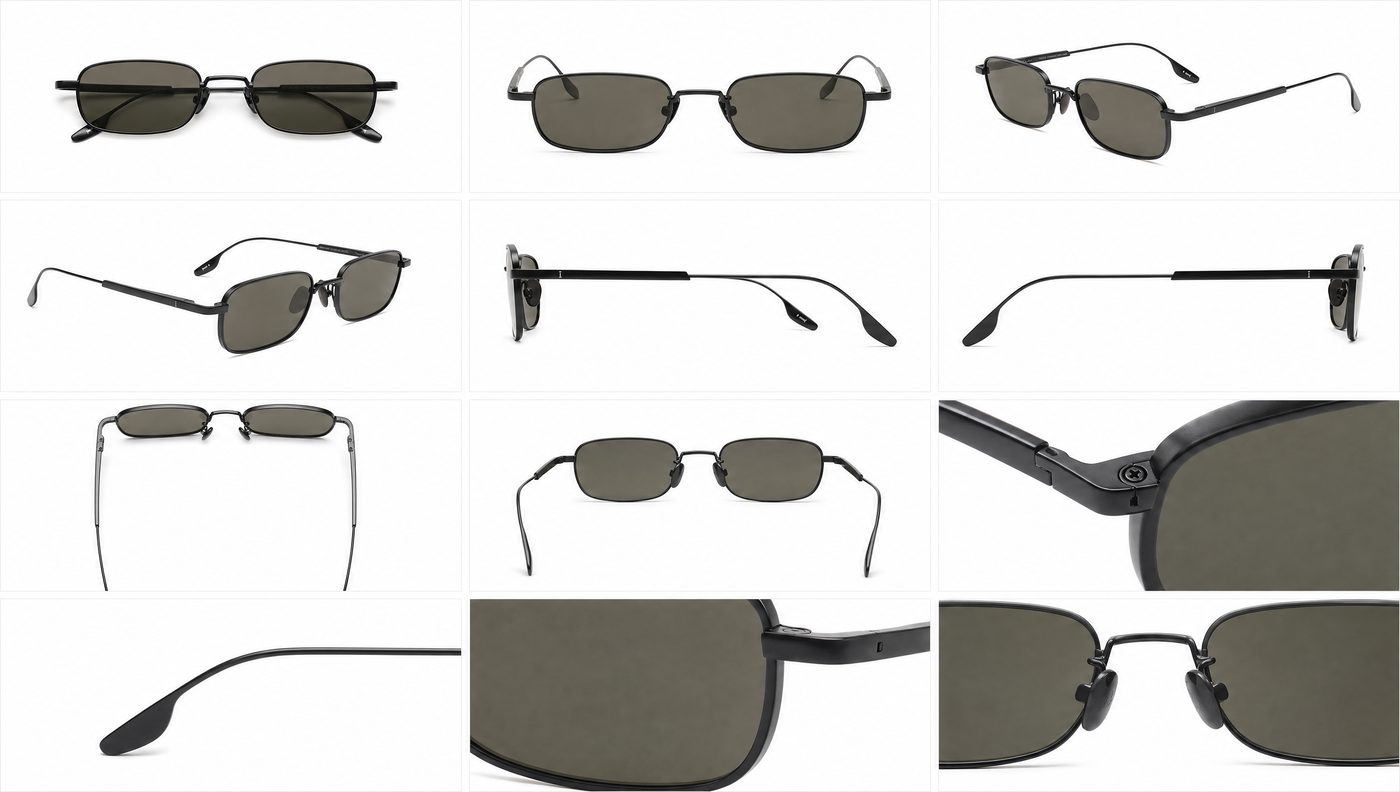 Product specification · titanium. The second line, identical treatment
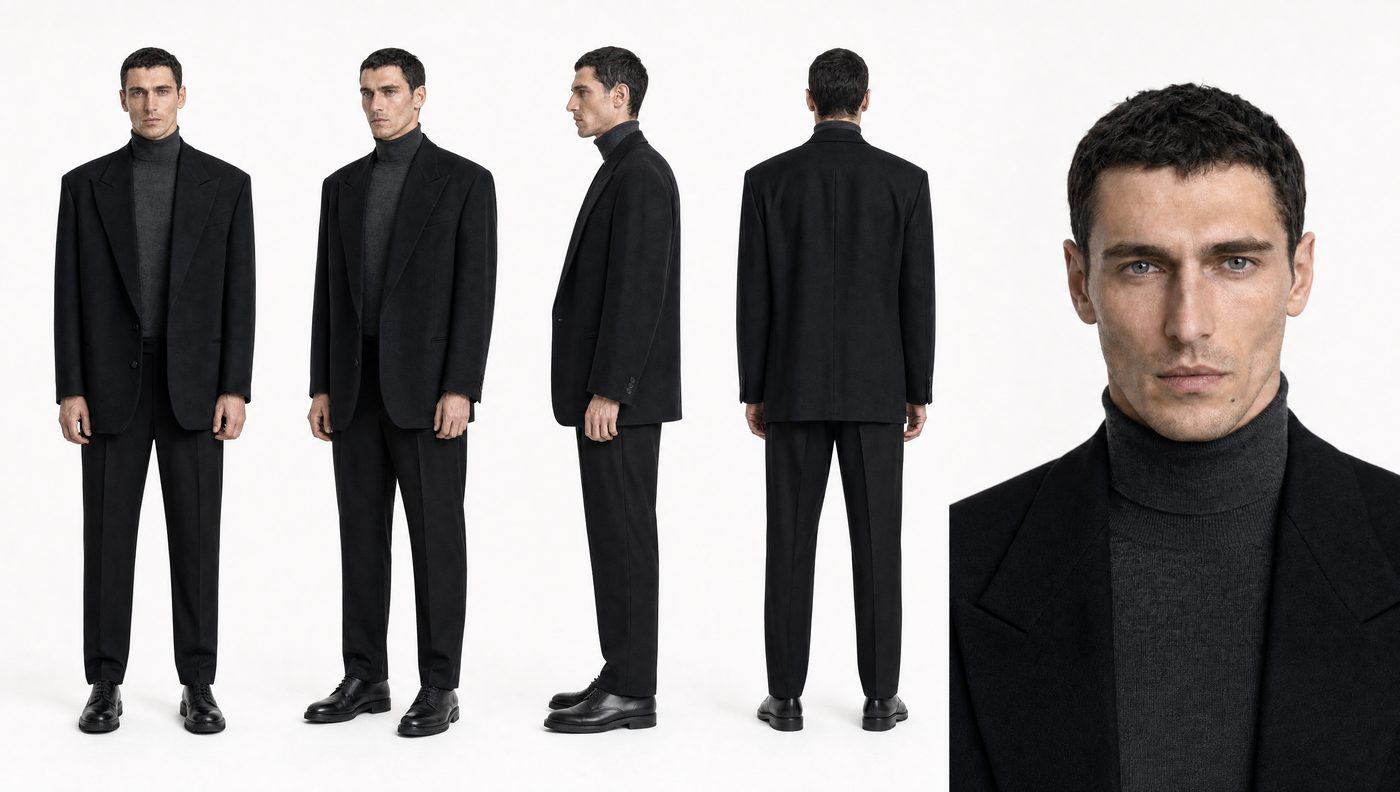 Avatar 01 · four body views plus face. Identity locked before any ad is built
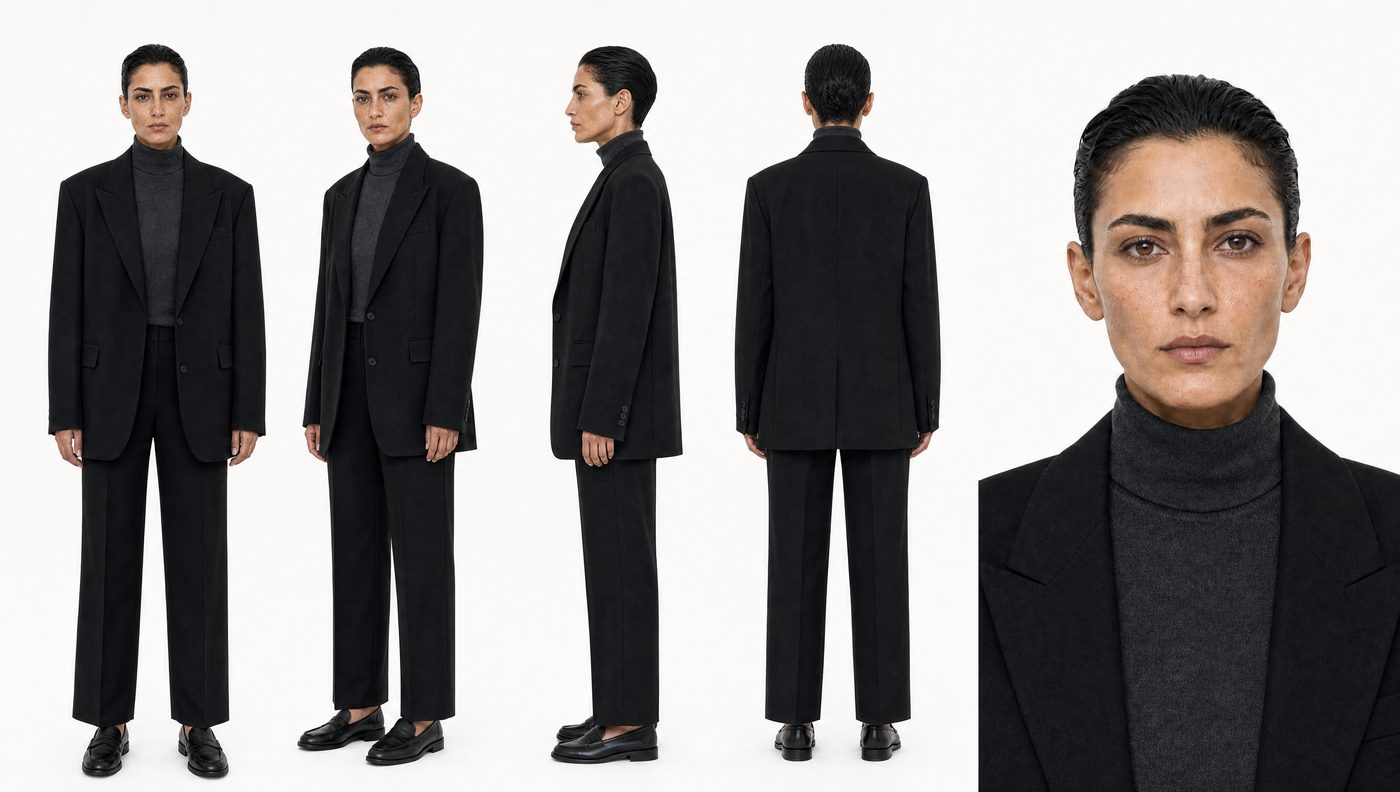 Avatar 02 · same treatment, same wardrobe system
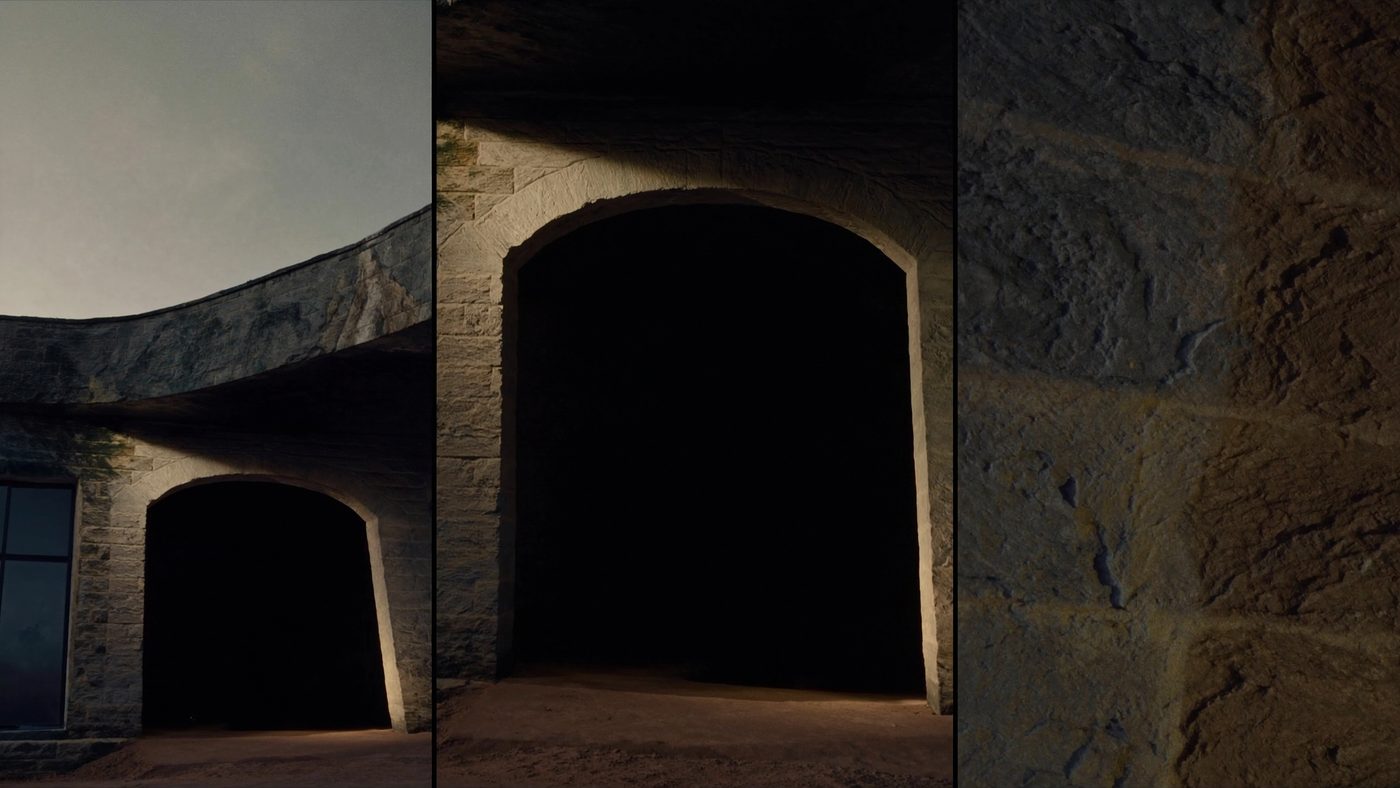 Location · three views, so every frame shares one world
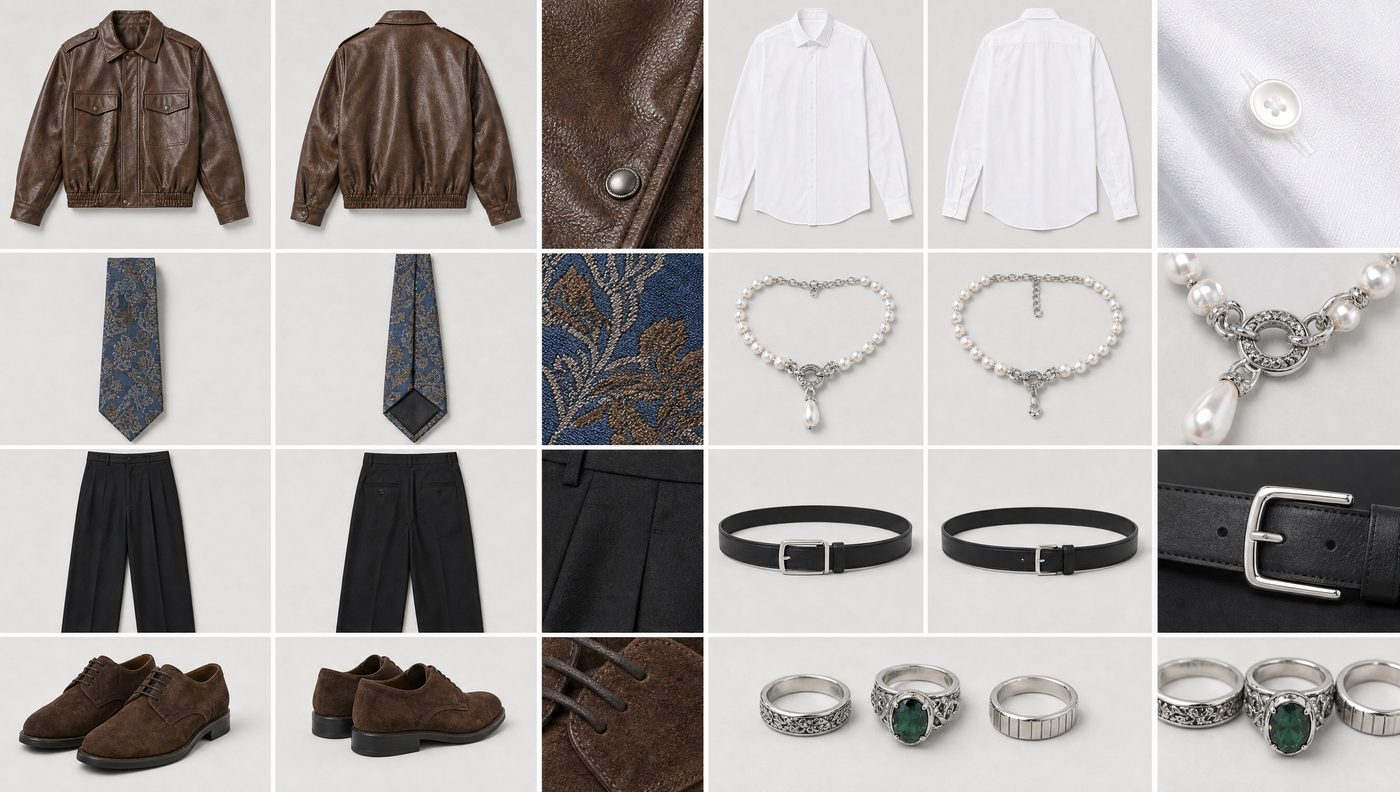 Wardrobe · menswear. Every piece front, back and fabric macro
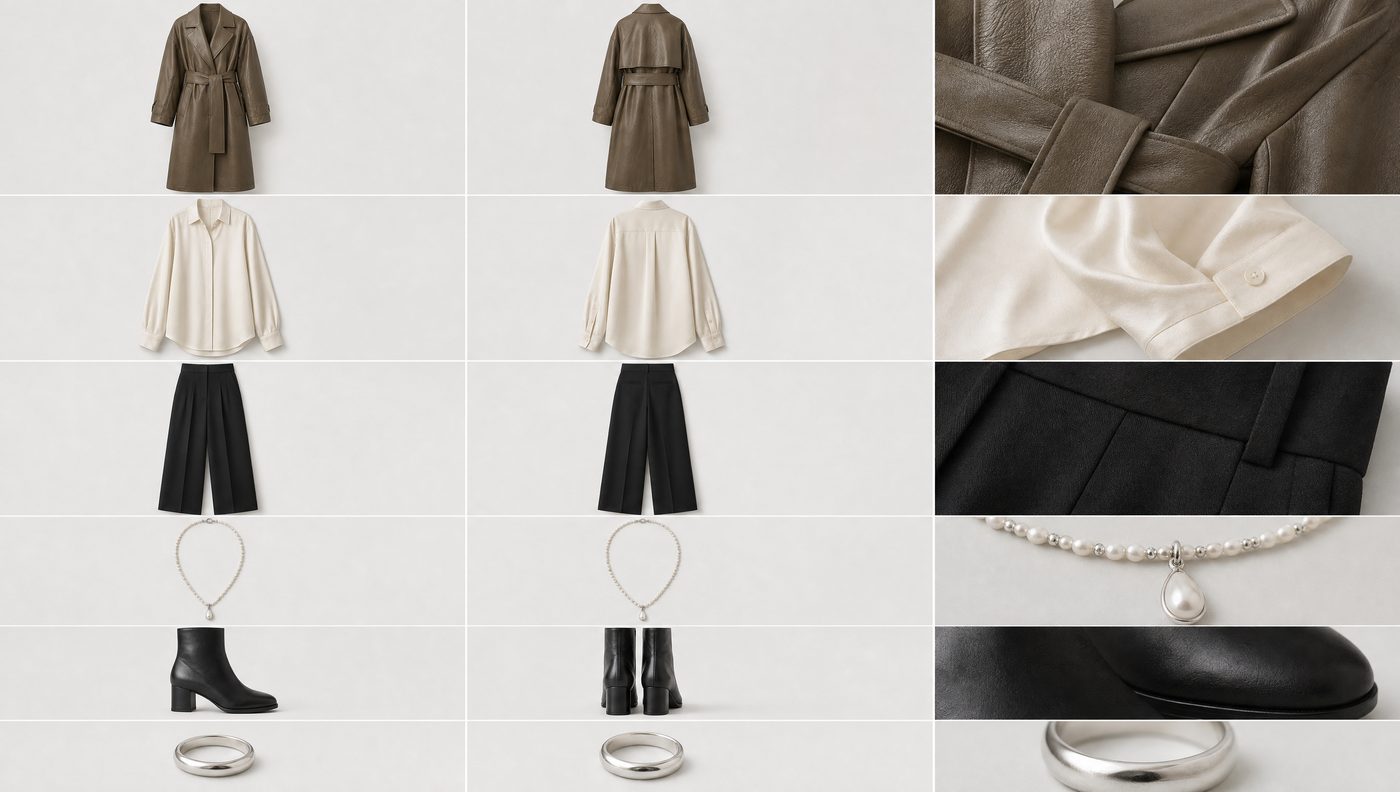 Wardrobe · womenswear
The films
Both 9:16 at 1080p, cut for feed. Their soft human treatment carrying the hard raking specular that until then lived only in their product renders — two lighting registers the brand owned separately and had never combined.
Both carry their mix. They start silent because browsers insist on it — click either one to hear it.
And the format that actually carries reach
The two films above are brand work. This one is the other half — the performance format, built from the same specification, the same avatar and the same frames. No camera, no booking, no studio day.
That distinction is the whole point. Brand imagery and performance creative are different products with different jobs, and most brands own one and keep buying more of it. One library produces both.
Reference cuts and plates, watermarked and downscaled. The masters are full resolution.
Evidence
What the data actually supports — and what it does not
You are probably asking whether AI-produced creative performs. The honest answer is more useful than the enthusiastic one.
A 2026 study by researchers at Columbia, Harvard, the Technical University of Munich and Carnegie Mellon, run across more than 500 million ad impressions, found AI-generated creative reached 0.76% CTR against 0.65% for conventionally produced creative, with no measured degradation in downstream conversion.
One caveat worth stating: the study was conducted with, and published by, the ad platform whose data it used.
Read honestly, that is parity — not a conversion advantage. No credible independent data shows AI imagery converting better than a good photograph, and anyone telling you otherwise is selling.
So the argument is not that this creative is better. It is that you can have more of it, sooner, at a unit cost that lets you test properly — and that volume and cycle time are themselves performance levers. Zalando's own executive framed it exactly that way, explicitly declining to claim the content was superior.
Two further things we will not pretend about. Product categories with hard geometry — eyewear, watches, footwear, jewellery — are materially harder than apparel, and case studies drawn from clothing do not transfer to them. And creative can only be optimised against numbers somebody is collecting, so if your pixel coverage is partial, that is step zero rather than an afterthought.
Standard
The gate every asset clears
"Not noticeable as AI" is, in practice, a geometry problem rather than a skin problem. In eyewear a frame has to sit on a nose, clear a brow, pass over an ear and reflect one light source. Every one of those is somewhere generated imagery fails visibly, and every product category has its own version of the list.
So each image clears a fixed gate before it ships:
- Your product, not an approximation — built from your own photography
- Fine detail survives — engraving, stitching, hardware, wherever the crop shows it
- The geometry holds — contact points, symmetry, nothing floating or passing through
- One light, one reflection, matched to your grade
- Only your marks — no invented wordmarks, no added hardware
- Hands hold at full resolution, or the shot is cut rather than shipped
A shot that fails one of these does not get retouched into place. It gets cut and re-run, because the cost of re-running is now measured in minutes.
Findings
What a decode usually surfaces
The specification is the deliverable, but the useful part is often what shows up on the way to it. Three findings recur so often they are worth naming.
One — the campaign contradicts its own line
A brand writes a tagline about connection, then shoots eighty frames in which nobody looks at the camera. The most ownable image available is usually the one the brand has told you it wants and never taken.
Two — one product line is marketed with the logic of another
In the case above, optical frames sat in the same visual language as sunglasses. But that buyer is making a different decision: nine hours a day, weight, comfort, how they look on a video call — not glamour. Same range, different purchase, and usually the highest-return change available without touching the product.
Three — there is campaign imagery, but no performance creative
Beautiful assets that establish a brand is beautiful, and not one of them making an argument. Nothing about what the thing is made of, what it costs relative to the alternative, or why it exists. In the case above, the strongest sales argument the brand owned was engraved on the product — and no image in the library showed it.
Brand imagery and performance creative are different products with different jobs. Most brands have one of the two, and buy more of the one they already have.
Angles
Where the arguments come from
An avatar that matches your house look is table stakes. It is not what makes a creative earn money. What determines that is the angle — the argument the ad makes — and the best ones are almost never invented.
We derive them, in this order:
- Your own product copy and packaging. What is already printed, stamped or engraved on the thing.
- Your price against the category. Not against your own range — a narrow internal price spread is not an angle.
- Your reviews. Where use cases you never marketed show up, in your customer's words.
- Comments under your existing ads. You already paid for that engagement; almost nobody reads it.
- The purchase itself. How the product is genuinely used, which is often not how it is shot.
Each angle is paired with a hook direction, a format and a funnel position, then tested by holding the angle constant and changing the format. That is the only way to learn whether the argument failed or the format did.
Cadence
How this runs once it is running
Five to ten new performance concepts every two weeks — produced, tested, and optimised against the numbers.
That interval is not arbitrary. It is set to the fatigue window at the top of this document: new concepts arrive before the current ones decay, so the account never runs on tired creative and never waits on a shoot.
| Stage | What happens |
|---|---|
| Read | Last cycle's numbers by angle and by format — what earned attention, what converted, what fatigued fastest |
| Select | Winning angles extended into new formats; losing angles retired or re-cut. New angles drawn from reviews and comments |
| Produce | 5–10 concepts through stage 3, cut to platform ratios, against the full output standard |
| Ship & test | Delivered ready to run, structured so results are readable at the angle level rather than the asset level |
Six angles across three formats is eighteen concepts. Through a conventional shoot that is a budget conversation. Through stage three it is a production run.
Inputs
What we would need from you
Short list, and most brands already have all of it.
- Product photography — clean, on neutral ground, front, three-quarter and profile. This is the one non-negotiable, because the product is composited from it rather than generated.
- Your existing campaign assets, whatever exists. The specification is decoded from these.
- Brand guidelines if they exist. If they do not, you get a written specification out of stage 1 either way.
- Your best and worst performing creative, with the numbers attached. This tells us more than guidelines will.
- Where the assets run — feed, story, site, or all of it — so ratios are right the first time.
- Pixel and analytics access, or a clear account of what is currently instrumented.
What we do not need: a shoot, a casting call, a booking window, or a usage negotiation.
Next
Where this stands
- The case
- Produced through the system described here, shown at reference resolution so the work can be judged rather than described
- Fit
- Built for established GCC brands with a live account and a range that needs feeding. It is not a fit for a first campaign or a single product
What a first call actually covers
- Your range and cadence. How many products, how often you drop, and how fast creative currently fatigues on your account.
- What is instrumented. Which channels you can read today, and which you are spending on blind.
- Casting. Who your customer actually recognises — which is a strategy question long before it is an aesthetic one.
- Which products lead the first cycle, and on what argument.
- Who signs off, and how fast. Approval speed sets the cadence more than production does.
If the arithmetic at the top of this document describes your account, the next step is a conversation.